Exploring the Future of Visual Sensing in Strategic Planning
Over a few months last year, the authors of this paper facilitated a strategic-planning exercise for a large corporate business unit (BU) client working in the North American fibre-based packaging industry. The BU was seeking to refine its business strategy, create a new vision for a revamped management team and to position itself as an attractive investment opportunity for Head office.
Strategy consultant Iryna Baturevych explored how AI might enhance the exercise; Oksana Kandabura, a visual artist, used visual sensing and scribing techniques during the sessions to help the strategic-planning team better capture what was happening during them; and Mark Hollingworth, president of 5i Strategic Affairs, concentrated on hosting and facilitation. Although we knew each other, this was our first time working together on a consulting mandate. By collaborating, we sought to enhance the cold, hard data and analysis generated by models and conversations, while also sensing and capturing the equally important “warm/living data” tied to participants, which was ever-changing during the process.
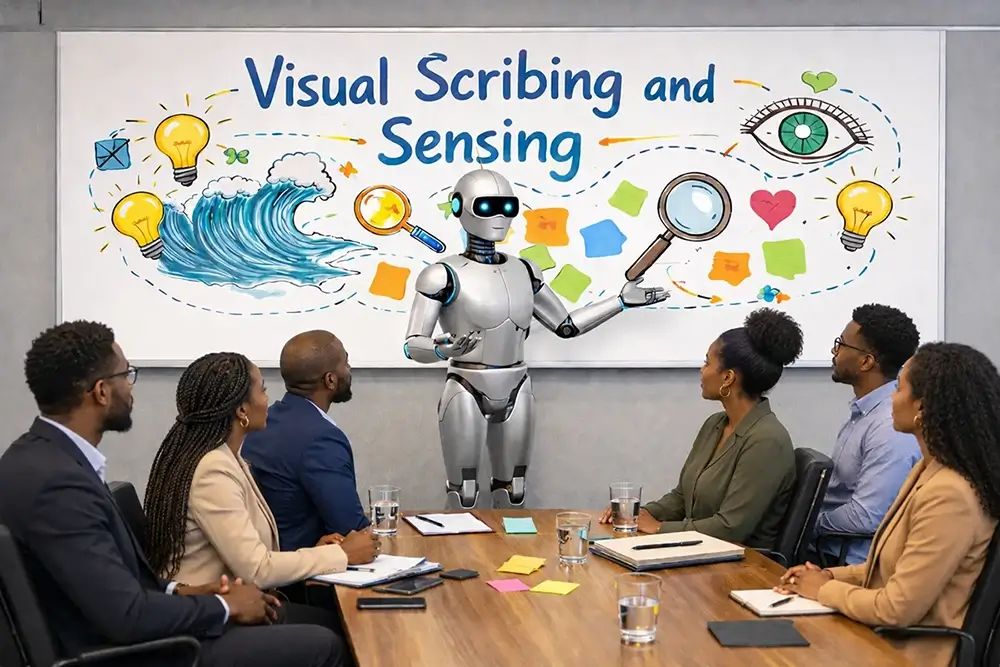
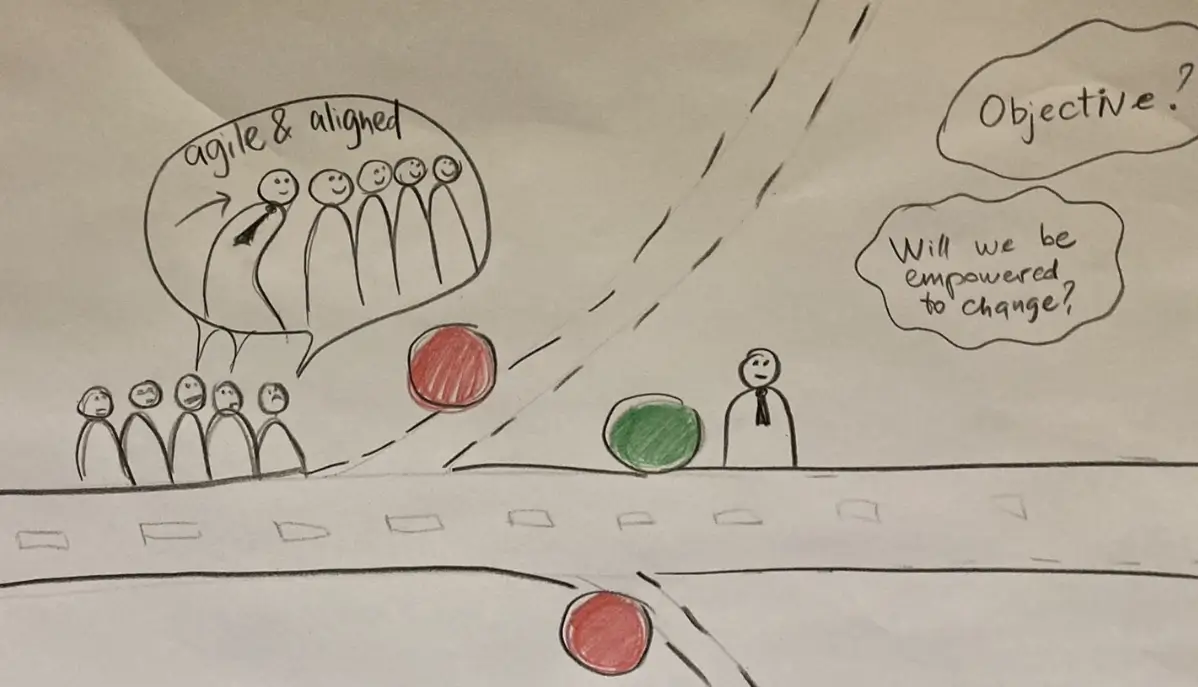
This article aims to explore how AI can help humans better interpret and learn from visual scribing/sensing imagery that is generated during strategic-planning meetings. Three AI tools—Gemini, Claude, and ChatGPT (using the Aiden Cinnamon Tea Sensibility Simulation Protocol 2.0)—were asked during the sessions and afterwards to interpret Kandabura’s artwork from each of the three two-day off-site retreats. Their outputs were merged for this article. We invite you to spend a minute or two observing this work (presented below) before reading the subsequent texts. What do you see/sense? How do you interpret them?
SESSION 1
SESSION 2
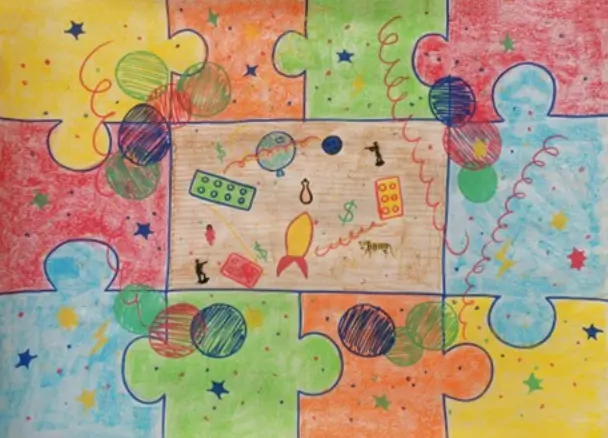
SESSION 3
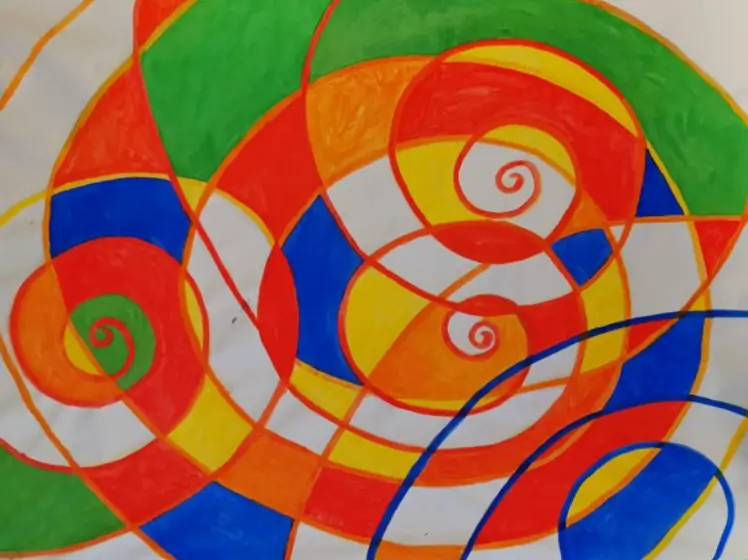
Process Evolution
As the AI noted:
The journey moves from anxiety and hierarchy → integration and construction → flow and systemic coherence and from questioning voice → assembling purpose → generating shared rhythm. It is a progression not just in strategic clarity, but in the increasing relational maturity of the group. The group stopped negotiating authority and started experiencing collective movement—a team ready not just to execute a plan, but to navigate complexity together with agility and mutual trust.
Ten Lessons Learned
1.
We used AI post-process and in private to glean the maximum from the images. In the future, we would use AI “in situ”—in front of participants at the end of each session—to provoke deeper discussion, and we would allocate significantly more time to the exercise.
2.
The main value of the AI tools interpreting each artwork was that they made explicit what was largely implicit to the team members: factors, connections, paradoxes, and irregularities were “put on the table” for all to see, without requiring any individual to have the courage to voice them. They certainly highlighted elements that neither we, as facilitators, nor the participants consciously voiced or noted.
3.
Although we used three AI models, one may be sufficient. Formats and styles differed, but no single tool proved clearly superior. It comes down to personal preference.
4.
Simply having someone in the room tasked with sensing the experience in each moment—and capturing it through art—changed the social field in the space, and for the better.
5.
The major challenge for facilitators is to create an atmosphere of openness, creativity, and (serious) play at the onset that welcomes visual sensing as a legitimate strategic-planning tool. Having someone formally appointed (and highly visible) in that role amplifies that openness.
6.
It takes courage to introduce visual sensing into corporate decision-making. As with anything new, you must be willing to fail—or learn. Nothing of value may emerge. But you will never know unless you try.
7.
You do not need artistic talent for visual sensing—although it is obviously an asset. You do need to set aside judgment and allow your hands to move freely. The golden rule: “Never second-guess yourself. If it feels right, let it happen.” There is no good or bad creation (after all, visual scribing/sensing is a form of “brainstorming”).
8.
When showing the art to the strategic-planning team in order to gather their insights and opinions, it is important for facilitators to emphasize that no comments are “good or bad.” Those with more comfort with “modern art” may offer more insights but an absolute novice may offer a viewpoint that proves invaluable and that no one else could see, feel, or express. They will only do so if they feel comfortable enough to share.
9.
“Warm data” elements such as buy-in, engagement, motivation, trust, and connection are vital to decision-making and change management, yet tough to capture in KPIs or PowerPoint. Capturing them in works of art may be the only way to articulate them.
10.
The left side of the brain seeks to understand and control the world in fragments—language, logic, explicit facts. The right side of the brain, excelling at implicit knowledge, ambiguity, paradox, and emotional intelligence, sees the world as an integrated, dynamic system. The left brain is naturally dominant; visual sensing allows the right brain to come to the fore. Perhaps this is what the world needs today.
The “Big” Insight
In the right hands, the use of AI for data collection and analysis at each step of the strategic-planning process and to assist with the creation of the final plan can save a lot of time and create a lot of value. The drawback is that it increases the focus of the strategic-planning team on what the “cold,” hard data and facts might tell them.
In order to expose, include, and highlight the “warm,” soft data that is equally important in the process, we believe that the use of visual sensing will prove essential to counterbalance the “left-brain” dominance and tendency. Never forget that strategic planning is as much a human “change” experience as a rigid exercise in analyzing data.
Perhaps most importantly, the client was happy at the end of the process: The BU created a shared vision of where the team was going and a roadmap to get there and had attained a high level of buy-in from all participants. “Our hypothesis is that AI, the social arts, and strategic-planning exercises constitute a perfect strategic-planning triad.”

MBA, M.Eng
About Authors

Read more
Leading Beyond Reasoning: Webinar Recap
Enhancing Scenario Planning With AI
The Recipe for Successful Leverage of AI: Human Beings Being (More) Human!